
On this page
A KEY QUESTION
Seek help when needed; an incomplete record is enough to bring to a clinician.
Symptom and contact record
A note-taking tool only. It does not assess urgency, diagnose symptoms or contact a clinician. Seek care when needed; do not wait to complete the record.
Your entries stay in this page’s memory. They are not saved on this website or sent to Best Smile Turkey, a dentist or analytics. Leaving or reloading can clear them. Download or print only if you want a copy, and protect it on shared devices.
For breathing or swallowing difficulty, or swelling affecting the eye or neck, seek local emergency care. UK: 999 / A&E. Türkiye: 112. For urgent dental advice, contact a local dentist; in England, NHS 111 can help if a dentist is unavailable. Do not wait for a coordinator or flight home.
Read the guide’s local help sectionLoading worksheet controls. Please wait before entering details.
Chronological notes to discuss with a clinician
Review this before saving or sharing. Nothing is submitted by this worksheet.
Chronological notes to discuss with a clinician

Personal worksheet. Not a clinical plan, diagnosis, quote or travel clearance.
Entries are not sent to Best Smile Turkey or a clinician.

Relevant treatment and date, if known: Not entered
Location in your own words: Not entered
When you first noticed the problem: Not entered
Clinical contact and requested review: Not entered

Time basis: each observation uses its recorded wall-clock time and the UTC offset entered beside it. Sorted by wall-clock date and time only; no timezone conversion is performed. Check offsets before comparing observations across the UK and Türkiye or a clock change. A missing offset means the time basis is unconfirmed.

Item 1
Date and time (recorded wall-clock time): Not entered
UTC offset at this observation: Not entered
What I noticed or what changed: Not entered
Effect on eating, sleeping or daily activities: Not entered
Who I contacted, when and what they said: Not entered

These notes have not been clinically assessed. For urgent symptoms, seek local care rather than waiting for a reply or completing this record. For breathing or swallowing difficulty or swelling affecting the eye/neck, seek emergency help. UK: 999 / A&E; Türkiye: 112.
When to get local help
Swelling around the eye or neck, or swelling affecting breathing, swallowing or speech, needs immediate local emergency care. In the UK, use 999 or A&E; in Türkiye, call 112 for an ambulance. Do not wait for a coordinator or flight home.
For urgent dental advice, contact a local dentist or treating team. In England, NHS 111 can help if an urgent appointment is unavailable. Absence of these warning signs does not establish that waiting is safe.
Describe what you noticed
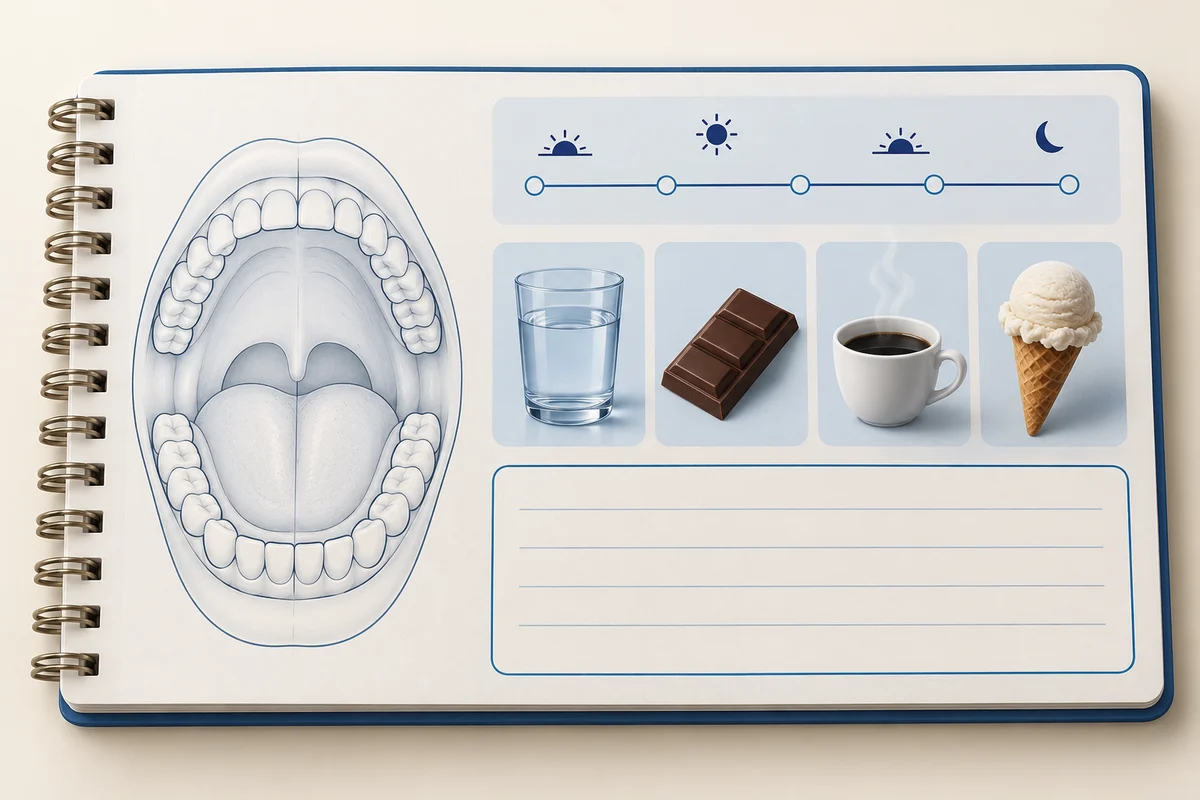
Enter the treatment and date if known, then the location in ordinary words. Record when symptoms began, marking estimated times. You do not need to diagnose the cause. Put a clinician’s explanation under advice received, separate from your observations.
Add changes by date
Each row holds local date and time, observations, effects on daily life and contacts. Describe the change specifically. The summary sorts dated entries and places undated ones last; it does not score severity or interpret trends. Do not delay advice to build a longer diary.
Keep advice and next steps
Record who you contacted, how, when and their actual advice. Mark a message left as awaiting a response. Distinguish promised callbacks from confirmed appointments. Ask the clinician to clarify any instruction you cannot confidently repeat back.
Read the related guidance
Keep the wider treatment plan in view while comparing these options.
Questions for a clinical assessment
Seek the local care described above first. When you speak with the clinician, these questions may help you understand the plan.
- Who should I contact after returning home, and how will reviews be arranged?
- Will I receive my treatment records and written care instructions?
Common questions
For future treatment planning, after appropriate clinical care: Compare starting prices in GBP, including zirconia crowns from £160. Your dentist confirms suitability and the full written quote.
About this information
Published by Best Smile Turkey, a health-tourism intermediary. Your treating dentist is responsible for assessment, treatment and care.
Use this information to prepare questions for your dentist. An examination is needed to advise on treatment. Photographs, models and previews cannot establish suitability or predict results.
Source checking is not a clinical review. How we use sources and images, or how to report a correction.
Sources and further reading
- NHS: toothache and getting help When dental symptoms need assessment, emergency warning signs and routes to urgent dental care.
- GDC: communicate effectively with patients UK standards for understandable information, treatment plans and explaining costs and changes.
- FCDO: health and healthcare in Türkiye Healthcare and insurance considerations for travel and the Turkish emergency ambulance number.
- NHS: dental treatments explained An overview of crowns, bridges, veneers, implants and other options.
- General Dental Council: going abroad for dental treatment Questions to ask about the treating provider, follow-up arrangements and concerns.
These resources offer general guidance; their publishers do not endorse Best Smile Turkey or the treating provider. Manufacturer links identify products or records, not independently compared outcomes. NHS funding information concerns UK care, not treatment costs in Turkey.
Ask about this information or report a correction