
On this page
A KEY QUESTION
Report the location, start time and any change, then arrange the assessment advised.
What were you told to expect?
Use the treating team’s advice about the anaesthetic as your starting point. Tell them if feeling has not returned as expected, affects a different area, or returns and then changes again.
There is no universal online deadline for distinguishing normal numbness from a complication. An absence of pain does not make an unexpected numb patch unimportant.
Why an examination matters
Nerves near lower-jaw implant and wisdom-tooth surgery supply feeling to the lip, chin and tongue. Treatment near them can sometimes affect sensation. This does not establish the cause or severity of your own symptoms.
Calderdale and Huddersfield’s patient leaflet advises prompt contact with the surgeon for nerve-related symptoms. A clinician decides whether examination, review or referral is needed.
Describe the change
Note the procedure and date, exact area and side affected, when symptoms began and how they have changed. Use your own words: reduced feeling, pins and needles, burning, sensitivity or changed taste.
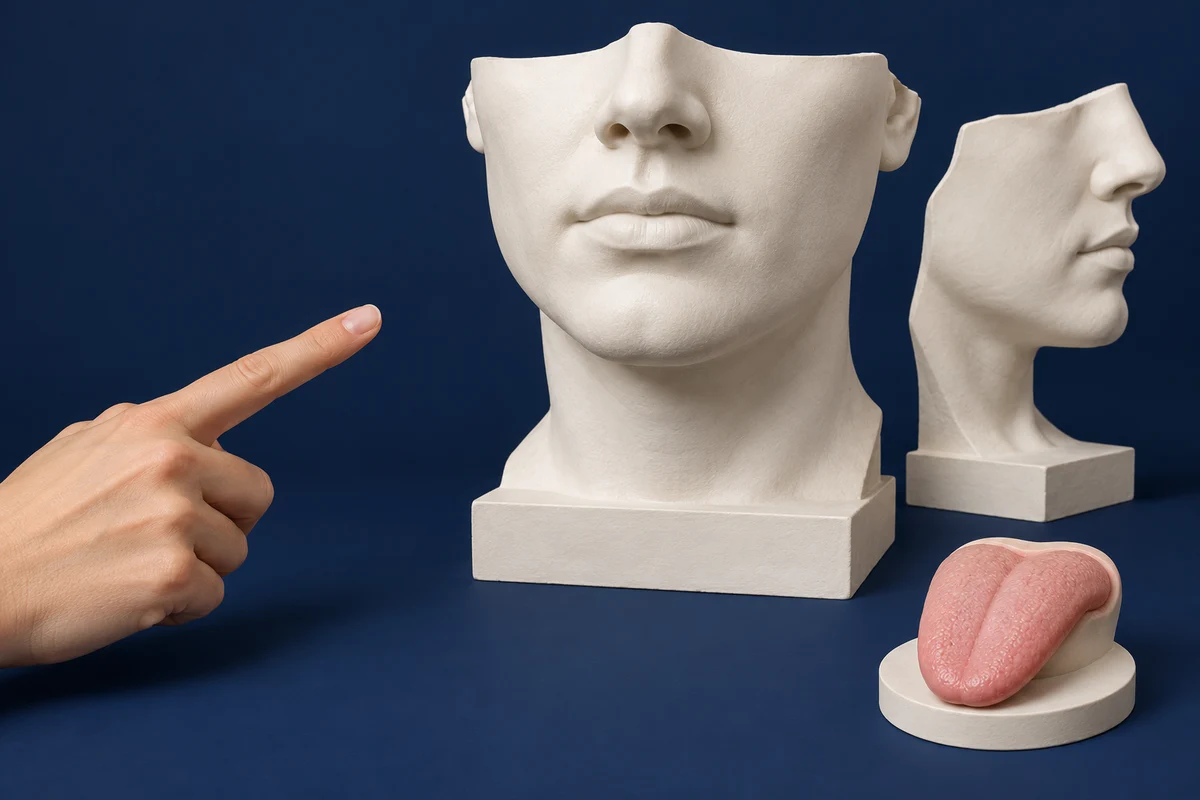
Mention problems eating, speaking or accidentally biting yourself. A photograph can point to a location but cannot measure sensation. Avoid repeatedly prodding the area.
Protect the area
Get eating, drinking and cleaning advice for your procedure and the affected area. Reduced feeling can make accidental injury harder to notice; report repeated biting of your lip or tongue.
Do not test with sharp objects, very hot drinks or ice against the skin. Exercises, supplements or medicines advertised for nerve recovery need professional advice.
Prompt contact or emergency help?
If the treating team cannot be reached, obtain local clinical advice. Explain upcoming travel, but do not let the flight or next planned visit set the assessment date.
Sudden facial drooping, arm weakness or speech difficulty can signal a stroke. Call 999 in the UK, or the local emergency number elsewhere, immediately, even if symptoms pass. Do not assume these are dental anaesthetic effects.
The follow-up plan
Find out what the examination showed, what remains uncertain, who will review it and which changes need earlier contact. Keep the treatment records if another clinician is involved.
Some nerve-related symptoms improve; some persist. An online account cannot predict your recovery. Best Smile Turkey coordinates enquiries; clinical assessment and follow-up belong with the treating provider.
Read the related guidance
Keep the wider treatment plan in view while comparing these options.
Questions for a clinical assessment
Seek the local care described above first. When you speak with the clinician, these questions may help you understand the plan.
- Who should I contact after returning home, and how will reviews be arranged?
- Will I receive my treatment records and written care instructions?
- Who will carry out my treatment, and how can I check their qualifications and registration?
- What should I confirm about accommodation, transfers and travel before booking?
Common questions
For future treatment planning, after appropriate clinical care: Compare starting prices in GBP, including zirconia crowns from £160. Your dentist confirms suitability and the full written quote.
About this information
Published by Best Smile Turkey, a health-tourism intermediary. Your treating dentist is responsible for assessment, treatment and care.
Use this information to prepare questions for your dentist. An examination is needed to advise on treatment. Photographs, models and previews cannot establish suitability or predict results.
Source checking is not a clinical review. How we use sources and images, or how to report a correction.
Source-check record
These checks cover only the stated claims, not the whole page or your individual care.
- CHFT describes sensory nerves near lower wisdom teeth and prompt surgical contact for altered feeling. This checks wisdom-tooth information only, not implant-specific anatomy, the diagnosis or an individual referral decision. Checked .
- NHS stroke guidance supports immediate UK emergency action for sudden facial, arm or speech changes, even if symptoms stop. This is not a diagnosis or confirmation of an overseas emergency number. Checked .
- CHFT notes that nerve-related symptoms after wisdom-tooth removal may improve or remain incomplete. This checks that uncertainty only, not personal recovery prospects, review intervals or a provider’s follow-up arrangements. Checked .
Sources and further reading
- Cambridge University Hospitals NHS: insertion of dental implants Nerves near lower-jaw implant surgery and possible changes in lip, chin or tongue sensation.
- Calderdale and Huddersfield NHS: removal of impacted wisdom teeth Patient leaflet advising prompt contact with the surgeon for symptoms suggesting altered nerve function.
- NHS: symptoms of a stroke Immediate emergency action for sudden facial weakness, arm weakness or speech changes.
- NHS: dental treatments explained An overview of crowns, bridges, veneers, implants and other options.
- General Dental Council: going abroad for dental treatment Questions to ask about the treating provider, follow-up arrangements and concerns.
These resources offer general guidance; their publishers do not endorse Best Smile Turkey or the treating provider. Manufacturer links identify products or records, not independently compared outcomes. NHS funding information concerns UK care, not treatment costs in Turkey.
Ask about this information or report a correction