

On this page
A KEY QUESTION
Ask which tooth supports the bridge, what preparation is planned and whom to contact if the bridge loosens or feels different.
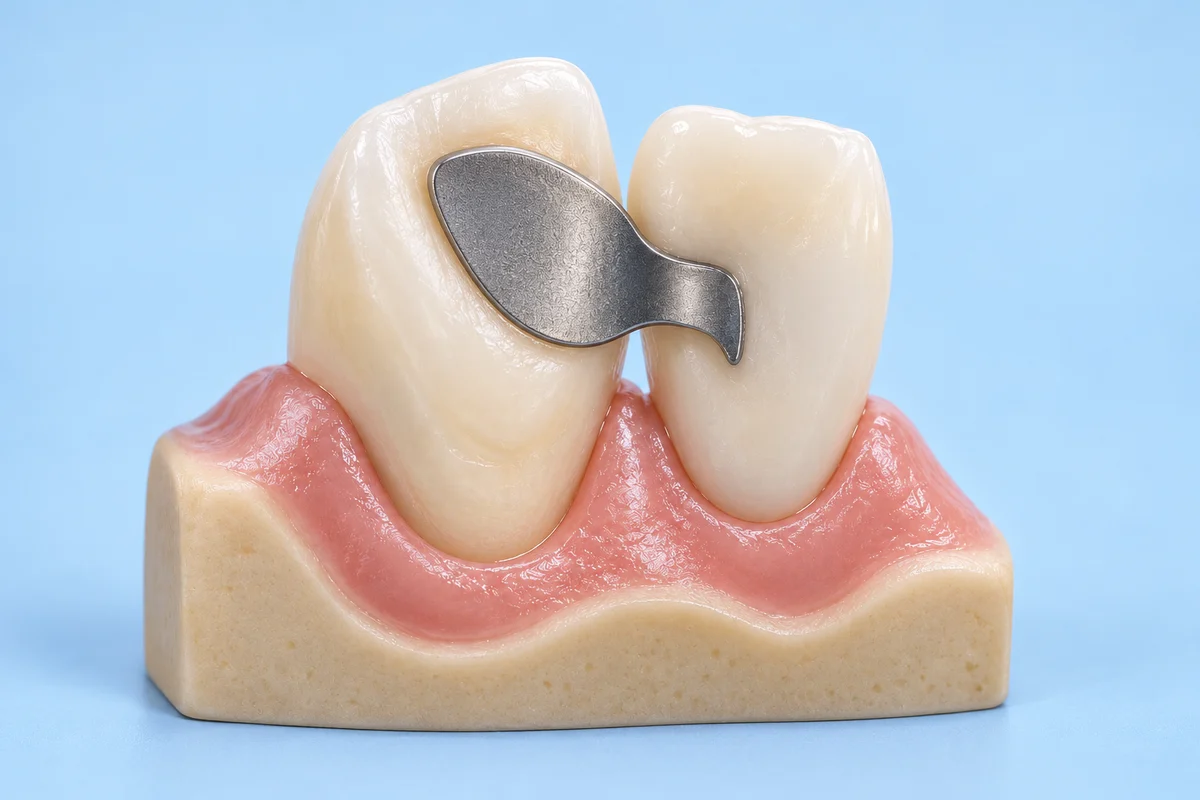
How the wing supports the tooth
The wing is usually bonded behind a neighbouring tooth, which carries the replacement. Unlike a denture, the bridge is not removed daily.
Have the dentist point out the supporting tooth and where the wing will sit. Discuss whether any part could be visible.
Assessing the supporting tooth
The supporting tooth must be healthy enough for the proposed bridge. Examination, and X-rays where needed, help assess it. The available bonding surface, existing restorations and bite also matter.
A photograph of the gap cannot establish these details. Ask what makes this tooth suitable and whether another design was considered.
To prepare for the comparison discussion, use the implant and bridge comparison guide. Ask your dentist to explain the proposed design and alternatives for your own gap; this guide does not confirm suitability or a treatment quote.
Preparation and laboratory work
An adhesive bridge can need little or no drilling, but zero preparation is not guaranteed. The clinician should explain any proposed tooth changes before taking the records used to make the bridge.
Know what you will wear while laboratory work is completed, and which appointments are for records, try-in and fitting.
Check the crown and bridge quote-scope questions. A single-crown fee is not an adhesive-bridge quote. Confirm availability, design, laboratory work and appointments.
The try-in
The bridge is checked in the mouth before fitting. Changes may require another visit. Discuss the tooth’s shade, shape, wing position and bite at this stage.
A metal wing can sometimes affect the supporting tooth’s appearance. Raise concerns before fitting and establish how any agreed modifications will be checked.
If the bridge debonds
Debonding means the adhesive connection has failed. Keep a bridge that comes out so a dentist can assess it and consider re-cementing. That is a possibility, not a guaranteed repair.
Contact a dentist about movement or detachment. Do not rock it repeatedly or use household glue. Repeated debonding needs assessment of its cause.
Cleaning and review
The gum beneath the replacement tooth still needs cleaning. Request a demonstration suited to the bridge’s shape and make sure you can manage it yourself.
Keep the design, supporting-tooth details and instructions. Best Smile Turkey coordinates enquiries; clinicians assess and maintain bridges. If travelling for care, establish who would examine a loose bridge at home and how they would receive your records.
Read the related guidance
Keep the wider treatment plan in view while comparing these options.
Choose questions to ask.
Select your questions and copy the list, or open it as a WhatsApp draft. You can edit the message before sending.
Your consultation questions
Untick any questions you don’t need.
4 selected · No contact details needed.
Common questions
About this information
Published by Best Smile Turkey, a health-tourism intermediary. Your treating dentist is responsible for assessment, treatment and care.
Use this information to prepare questions for your dentist. An examination is needed to advise on treatment. Photographs, models and previews cannot establish suitability or predict results.
Source checking is not a clinical review. How we use sources and images, or how to report a correction.
Source-check record
These checks cover only the stated claims, not the whole page or your individual care.
- Bristol describes a neighbouring tooth supporting a resin-bonded bridge through a wing and the bridge staying fixed. This does not establish wing visibility, a particular design or individual suitability. Checked .
- Bristol describes examination and possible X-rays to assess supporting-tooth health. This does not decide which imaging is required or verify the bonding surface, bite or suitability of a particular tooth. Checked .
- Bristol advises keeping a detached bridge for review and possible re-cementing. This checks that limited advice only, not a repair guarantee, the cause of detachment or a self-repair procedure. Checked .
Sources and further reading
- Leeds: Bridges Adhesive wing support, preparation, fabrication, try-in, debonding and cleaning.
- Bristol Dental School: resin-bonded bridges Supporting-tooth assessment, laboratory stages, debonding, review and continuing care.
- NHS: dental treatments explained An overview of crowns, bridges, veneers, implants and other options.
- General Dental Council: going abroad for dental treatment Questions to ask about the treating provider, follow-up arrangements and concerns.
These resources offer general guidance; their publishers do not endorse Best Smile Turkey or the treating provider. Manufacturer links identify products or records, not independently compared outcomes. NHS funding information concerns UK care, not treatment costs in Turkey.
Ask about this information or report a correction