

On this page
A KEY QUESTION
Discuss allergies and comfort beforehand, then agree how to signal a problem while the dam is in place.
Why it is used
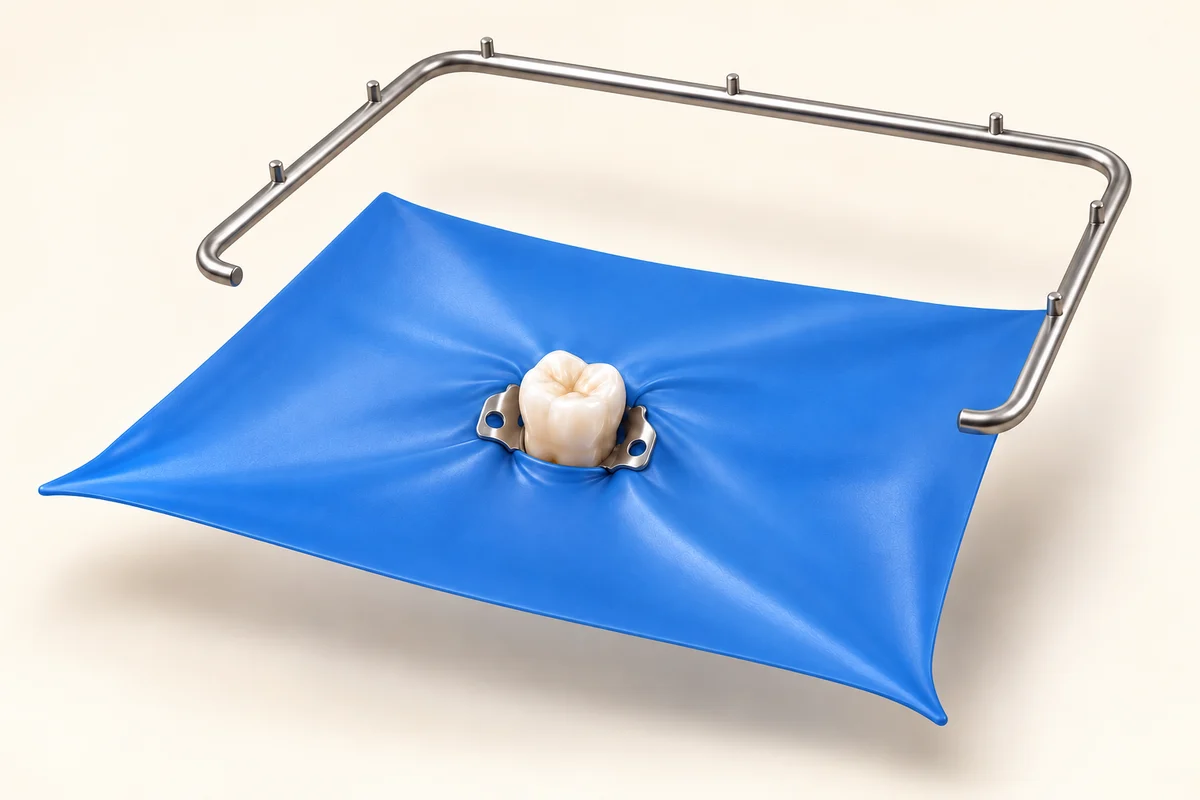
The dam keeps saliva away from the working area and helps prevent small instruments or materials entering the mouth. The American Association of Endodontists regards it as a key safety measure in root canal treatment. Its use does not mean your tooth is unusually damaged.
What placement involves
The treated tooth or teeth sit through an opening in the sheet, held by supports that may include a clamp. Have the equipment and expected pressure explained. Report uncomfortable placement. Isolation does not numb the tooth; pain still needs the clinician’s attention.
Breathing and access concerns
Mention nasal blockage, breathing difficulties, a strong gag reflex, limited opening or previous panic before treatment. The clinician can assess positioning and explain placement. Report breathing difficulty immediately rather than trying to endure it. Comfort and access vary between people.
Latex and other reactions
Some dams contain latex and others do not. Tell the practice about confirmed allergies or previous reactions when booking, including the product and reaction if known. The team needs to consider all materials used, not just the sheet. Do not test a suspected allergy yourself.
Signals and pauses
Agree a simple hand signal for pain or a pause before your mouth is occupied. Discuss how saliva and breaks will be managed. Explain communication needs, including hearing aids, an interpreter or step-by-step instructions, so the team can plan how to check on you.
If placement is difficult
The clinician may consider preparation, different materials, an adapted appointment or referral. Difficulty tolerating the dam needs a safe clinical solution rather than simply omitting protection. Raise concerns before travelling for treatment and confirm appropriate arrangements with the provider.
Read the related guidance
Keep the wider treatment plan in view while comparing these options.
Choose questions to ask.
Select your questions and copy the list, or open it as a WhatsApp draft. You can edit the message before sending.
Your consultation questions
Untick any questions you don’t need.
3 selected · No contact details needed.
Common questions
About this information
Published by Best Smile Turkey, a health-tourism intermediary. Your treating dentist is responsible for assessment, treatment and care.
Use this information to prepare questions for your dentist. An examination is needed to advise on treatment. Photographs, models and previews cannot establish suitability or predict results.
Source checking is not a clinical review. How we use sources and images, or how to report a correction.
Sources and further reading
- American Association of Endodontists: treatment standards Clinical isolation standards, patient considerations and assessment of treatment difficulty.
- Leeds Teaching Hospitals: understanding endodontic treatment Restorability, uncertainty, isolation and the importance of the final restoration.
- American Dental Association: latex allergy Latex exposures in dental care, taking an allergy history and suitable material planning.
- NHS: dental treatments explained An overview of crowns, bridges, veneers, implants and other options.
- General Dental Council: going abroad for dental treatment Questions to ask about the treating provider, follow-up arrangements and concerns.
These resources offer general guidance; their publishers do not endorse Best Smile Turkey or the treating provider. Manufacturer links identify products or records, not independently compared outcomes. NHS funding information concerns UK care, not treatment costs in Turkey.
Ask about this information or report a correction