

On this page
A KEY QUESTION
Bring current device identification and ask who will resolve equipment questions with your cardiac team before treatment starts.
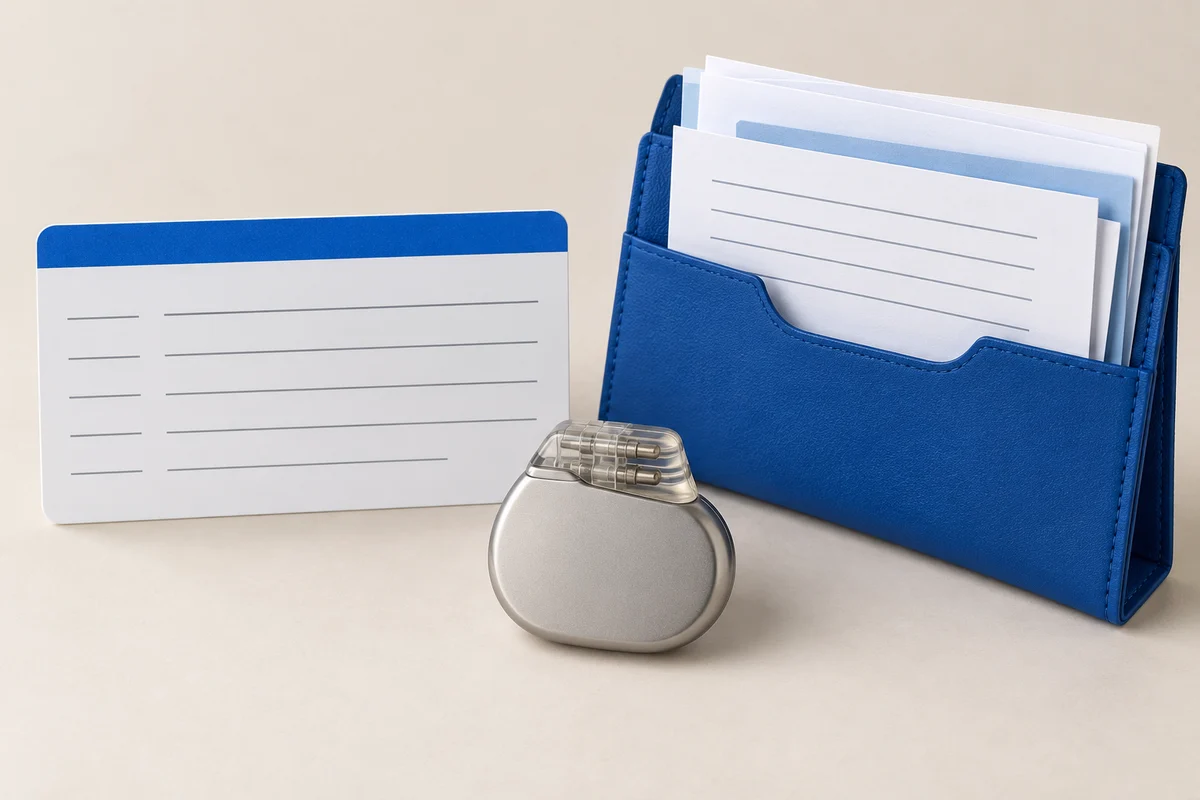
Bring current device identification
Provide your device card, follow-up clinic details and written precautions. Mention recent replacement, lead treatment or changed advice. If records are missing, contact the device clinic rather than relying on a remembered model name.
The British Heart Foundation advises showing device identification to healthcare professionals and telling dentists about a pacemaker. Share the information when arranging the visit so questions can be resolved before treatment begins.
Specify the procedure and equipment
Ask the dentist to identify the planned work and relevant electronic instruments. A request to your cardiac team is more useful when it describes the actual proposal rather than simply asking whether dentistry is allowed.
Also provide your medicine list and other cardiac history. Resolving equipment compatibility does not settle separate questions about medicines, anaesthetic or the overall procedure.
Who checks compatibility?
The American Dental Association describes possible electromagnetic interference and varied evidence between instruments, with many results coming from laboratory studies. Neither a universal ban nor a guarantee follows from those findings.
The dentist may need current manufacturer information and advice from your device clinic. Agree who obtains it. Do not use an online distance formula as clearance, change device settings or attempt to disable the system yourself.
The appointment plan and later changes
The clinical teams decide appropriate precautions and monitoring. Know what to bring, how to signal that you feel unwell and what happens if the proposed procedure changes. Make sure the treating dentist has the agreed advice.
Update records after device changes and keep routine cardiac reviews. Before treatment abroad, establish whether the necessary arrangements can be made. Best Smile Turkey coordinates enquiries; it does not provide cardiac-device clearance or promise a particular monitoring service.
Read the related guidance
Keep the wider treatment plan in view while comparing these options.
Choose questions to ask.
Select your questions and copy the list, or open it as a WhatsApp draft. You can edit the message before sending.
Your consultation questions
Untick any questions you don’t need.
4 selected · No contact details needed.
Common questions
About this information
Published by Best Smile Turkey, a health-tourism intermediary. Your treating dentist is responsible for assessment, treatment and care.
Use this information to prepare questions for your dentist. An examination is needed to advise on treatment. Photographs, models and previews cannot establish suitability or predict results.
Source checking is not a clinical review. How we use sources and images, or how to report a correction.
Sources and further reading
- American Dental Association: cardiac devices and electronic dental instruments Interference evidence, equipment differences and professional consultation rather than a universal compatibility rule.
- British Heart Foundation: living with a pacemaker Device identification, disclosure to dentists and seeking manufacturer or pacing-clinic advice.
- NHS: dental treatments explained An overview of crowns, bridges, veneers, implants and other options.
- General Dental Council: going abroad for dental treatment Questions to ask about the treating provider, follow-up arrangements and concerns.
These resources offer general guidance; their publishers do not endorse Best Smile Turkey or the treating provider. Manufacturer links identify products or records, not independently compared outcomes. NHS funding information concerns UK care, not treatment costs in Turkey.
Ask about this information or report a correction