

On this page
A KEY QUESTION
Review the tasks that have become difficult, then agree tools, support and professional care around your own priorities.
Name the difficult task
Explain whether the problem is opening toothpaste, gripping a brush, seeing a margin, reaching back teeth or staying comfortable. Mention appointment or transport barriers too. Share relevant health or medicine changes with the dental team; do not alter medicines yourself because of mouth symptoms.
Try adaptations with the team
Rotherham NHS guidance includes larger handles, grip aids and powered brushes. Bring your equipment and demonstrate the difficult step. Have the team show suitable adaptations, particularly around implants or attachments, then try them yourself. Agree how you will know the routine is working.
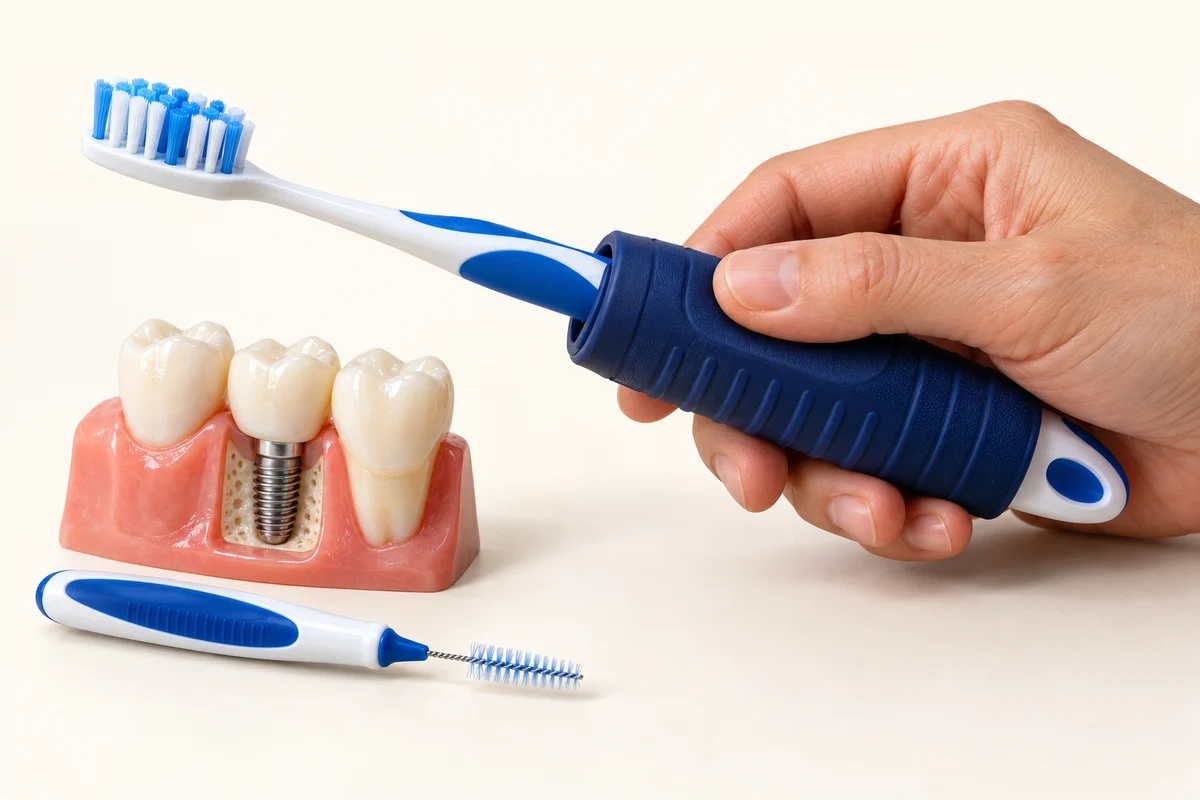
Choose the help you want
Support may mean setting out equipment, reminders or hands-on assistance. Agree who helps and how. NHS carer guidance emphasises independence and dignity. Request a demonstration with you present and a clear pause signal. Swallowing difficulties, pain or other clinical concerns need individual advice.
Review the actual restoration
A fixed bridge needs cleaning access underneath and around it; removable teeth need a manageable removal, cleaning and reinsertion routine. Neither is easiest for everyone. Ask the dentist about difficult attachments. Do not force clasps, alter dentures or try to remove fixed work yourself.
Include future maintenance in decisions
Before new dental work, discuss cleaning if grip or vision changes, professional servicing and access to records or parts. This does not predict loss of independence. Compare options around your priorities; age alone is not a reason to replace existing restorations.
Write down the revised routine
Keep agreed steps and contacts in an accessible format, with a backup if support is unavailable. Agree when to review them. Persistent pain, swelling, bleeding or loose work needs assessment. If overseas visits have become difficult, discuss realistic care nearer home.
- Tasks I manage and help I choose
- Demonstrated equipment and cleaning steps
- Appointment access and review plan
- Contact for new difficulties
Read the related guidance
Keep the wider treatment plan in view while comparing these options.
Choose questions to ask.
Select your questions and copy the list, or open it as a WhatsApp draft. You can edit the message before sending.
Your consultation questions
Untick any questions you don’t need.
3 selected · No contact details needed.
Common questions
About this information
Published by Best Smile Turkey, a health-tourism intermediary. Your treating dentist is responsible for assessment, treatment and care.
Use this information to prepare questions for your dentist. An examination is needed to advise on treatment. Photographs, models and previews cannot establish suitability or predict results.
Source checking is not a clinical review. How we use sources and images, or how to report a correction.
Sources and further reading
- Wirral NHS: oral health care for adults requiring assistance Supporting independence, dignity and practical mouth-care assistance.
- Rotherham NHS: toothbrushing with reduced dexterity Examples of adapted handles, grip aids and powered-brush options for discussion.
- Leeds Teaching Hospitals NHS: removable partial dentures Cleaning, handling and review of removable partial dentures.
- NHS: dental treatments explained An overview of crowns, bridges, veneers, implants and other options.
- General Dental Council: going abroad for dental treatment Questions to ask about the treating provider, follow-up arrangements and concerns.
These resources offer general guidance; their publishers do not endorse Best Smile Turkey or the treating provider. Manufacturer links identify products or records, not independently compared outcomes. NHS funding information concerns UK care, not treatment costs in Turkey.
Ask about this information or report a correction