
On this page
A KEY QUESTION
The repair depends on a dentist’s assessment of the tooth. A small visible chip does not tell the whole story.
When to get help
A chipped or cracked tooth is usually not serious, but needs dental assessment. Explain any fall, blow or severe continuing pain when booking. In England, NHS 111 can help with urgent dental access.
Go to A&E or call 999 for serious face or jaw injury, heavy mouth bleeding that will not stop, or head injury with loss of consciousness, vomiting or double vision. Outside the UK, use local emergency services. WhatsApp is not an emergency service.
Keep the broken piece
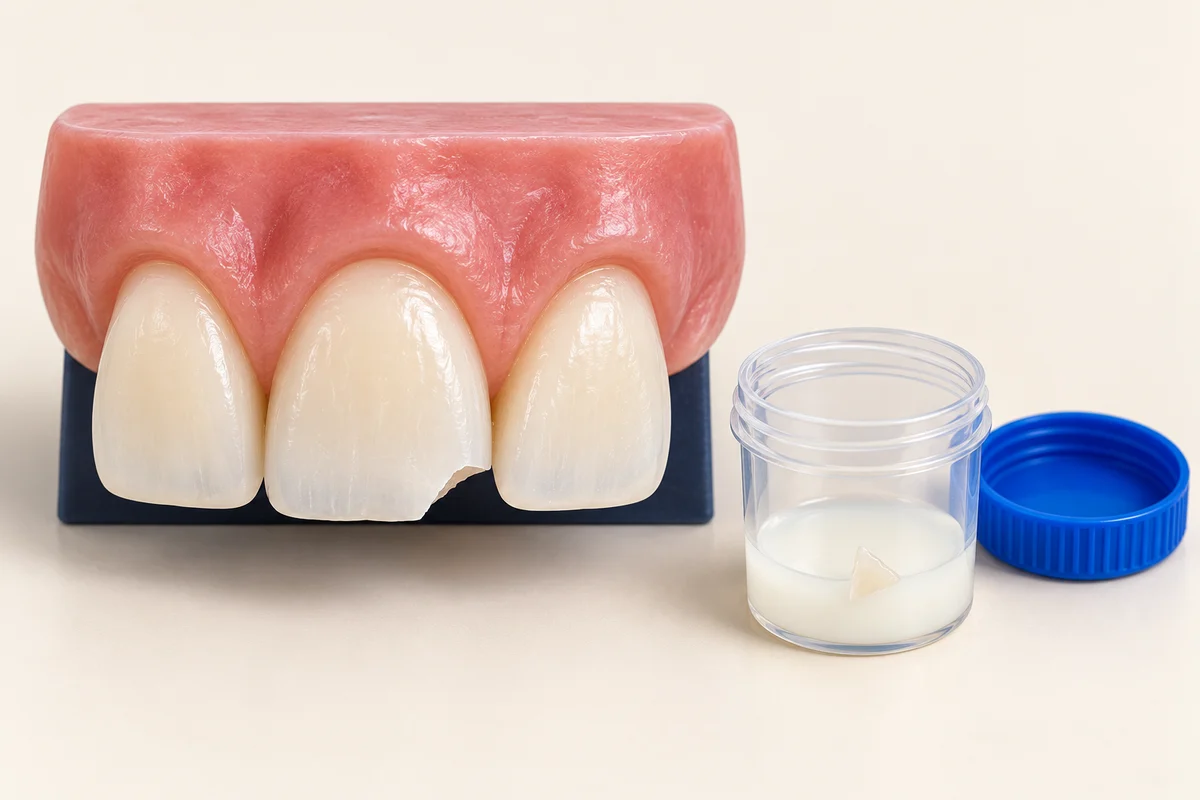
Put the fragment in milk or saliva spat into a container and take it to the dentist. It may be possible to reattach it. Do not delay care searching for it, use household glue or file a sharp edge yourself.
Explain how it happened
Say when the break happened and whether it followed an impact or hard bite. Mention cuts, bleeding, sensitivity, a changed bite and previous fillings or crowns. Tell the dentist if other teeth feel different too.
What the dentist checks
The examination establishes how much tooth tissue is damaged and whether tests are needed. If the dentist provides temporary protection, ask how to eat and clean around it, and which changes need earlier review.
Possible repairs
Options may include reattaching the fragment, a filling or a crown. A badly broken tooth may need root canal treatment. Ask how much healthy tissue each option removes. A chip alone does not justify reshaping neighbouring healthy teeth.
Reviews after an injury
Dental trauma can need continuing checks after the first repair. Get written follow-up instructions and agree who will review the tooth if you are returning home. Local injury care should come before an overseas cosmetic appointment.
Read the related guidance
Keep the wider treatment plan in view while comparing these options.
Questions for a clinical assessment
Seek the local care described above first. When you speak with the clinician, these questions may help you understand the plan.
- Will I receive my treatment records and written care instructions?
- Who should I contact after returning home, and how will reviews be arranged?
Common questions
For future treatment planning, after appropriate clinical care: Compare starting prices in GBP, including zirconia crowns from £160. Your dentist confirms suitability and the full written quote.
About this information
Published by Best Smile Turkey, a health-tourism intermediary. Your treating dentist is responsible for assessment, treatment and care.
Use this information to prepare questions for your dentist. An examination is needed to advise on treatment. Photographs, models and previews cannot establish suitability or predict results.
Source checking is not a clinical review. How we use sources and images, or how to report a correction.
Sources and further reading
- NHS: chipped, broken or cracked tooth Keeping a broken fragment and the treatment options a dentist may consider.
- NHS: emergency and urgent dental care Current urgent dental access routes, injury priorities and emergency warning signs.
- East Kent Hospitals NHS: dental trauma Assessment, stabilisation and follow-up after injuries to teeth and surrounding tissues.
- NHS: dental treatments explained An overview of crowns, bridges, veneers, implants and other options.
- General Dental Council: going abroad for dental treatment Questions to ask about the treating provider, follow-up arrangements and concerns.
These resources offer general guidance; their publishers do not endorse Best Smile Turkey or the treating provider. Manufacturer links identify products or records, not independently compared outcomes. NHS funding information concerns UK care, not treatment costs in Turkey.
Ask about this information or report a correction