

On this page
A KEY QUESTION
Agree only after the treating clinician has explained the plan in a way you can understand and your important questions are answered.
Arrange interpretation before travel
Establish which language the clinician will use and who will interpret if needed. Ask about healthcare interpretation skills, confidentiality and charges. A travel coordinator may have a different role. Support should cover consent, changes during treatment and aftercare, as well as the first enquiry.
Understand the treatment before signing
A signature does not replace understanding. The GDC’s UK consent standards emphasise discussion and decision time; they are not Turkish law. Have the dentist identify which teeth will be changed or removed, the alternatives and the consequences of waiting or declining.
Explain the plan back
Try: “My understanding is that these teeth will be prepared, this part is temporary, and this happens next.” Let the clinician correct any misunderstanding. Use a labelled diagram if helpful. Bring conflicting explanations back to the treating dentist before relying on either version.
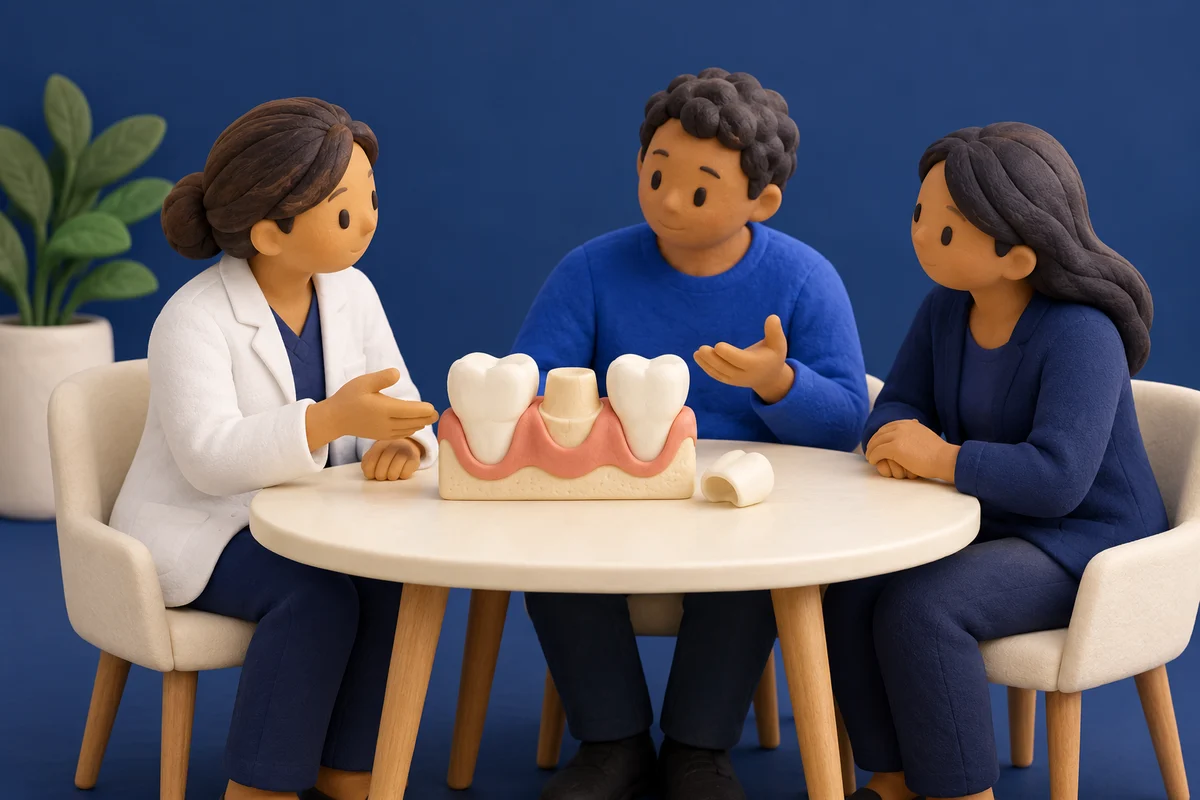
Get a readable written plan
Request the plan, risks, costs and instructions in a language and format you understand. Check translated versions include current tooth positions and treatment stages. A translation app should not be your only way to resolve a consequential uncertainty. A relative can support you without replacing your voice.
Pause when the plan changes
If examination findings change the recommendation, discuss why, the remaining options and effects on tooth preservation, cost and appointments. You can request more time or another opinion. Ask what safely postponing would involve; a flight booking does not settle the clinical decision.
Agree how to signal a pause
Before instruments are in your mouth, agree a clear pause signal. Establish how questions will be answered between appointments. Clinical explanations and consent discussions belong with the treating team, even when an intermediary helps organise communication.
- I understand the procedure and alternatives
- Risks and costs have been explained
- I know how to pause or revisit a decision
Read the related guidance
Keep the wider treatment plan in view while comparing these options.
Choose questions to ask.
Select your questions and copy the list, or open it as a WhatsApp draft. You can edit the message before sending.
Your consultation questions
Untick any questions you don’t need.
4 selected · No contact details needed.
Common questions
About this information
Published by Best Smile Turkey, a health-tourism intermediary. Your treating dentist is responsible for assessment, treatment and care.
Use this information to prepare questions for your dentist. An examination is needed to advise on treatment. Photographs, models and previews cannot establish suitability or predict results.
Source checking is not a clinical review. How we use sources and images, or how to report a correction.
Sources and further reading
- General Dental Council: obtain valid consent UK professional standards on understanding, decision time and consent throughout treatment.
- General Dental Council: communicate effectively with patients UK standards on clear explanations, communication support and checking understanding.
- NHS: dental treatments explained An overview of crowns, bridges, veneers, implants and other options.
- General Dental Council: going abroad for dental treatment Questions to ask about the treating provider, follow-up arrangements and concerns.
These resources offer general guidance; their publishers do not endorse Best Smile Turkey or the treating provider. Manufacturer links identify products or records, not independently compared outcomes. NHS funding information concerns UK care, not treatment costs in Turkey.
Ask about this information or report a correction